Fossil Hunting Expedition
Ariyalur Cretaceous Coast
- 16 to 19 October 2026
- Departing from Bangalore
- Open to all ages
- ₹15,000 per person, all inclusive
About the expedition
Around 70 to 100 million years ago, the coastline of South India ran through what is now Ariyalur in Tamil Nadu. A warm, shallow sea covered the land, full of coiled ammonites, sea snails, oysters, sea urchins and sharks. When these animals died, they sank into the mud and lime on the seabed and were slowly buried. Over millions of years, those layers hardened into rock. The sea retreated, and the old seabed became dry land.
Today that land is cut into gullies and ravines, and the fossils sit in the open, weathering out of the ground after every monsoon. Ariyalur is one of the richest fossil areas in India. Researchers have also found dinosaur bones and eggs in the region.
This is Above Zenith’s first fossil hunting expedition. Over one weekend, you will hunt for fossils at two sites with geologists and paleontologists, learn how to identify and record what you find, and take your finds home.
Why Ariyalur
Ariyalur's rocks are stacked in layers, with the oldest at the bottom and the youngest on top. Each layer is a snapshot of the sea at a different time. The youngest layers here date to just before the dinosaurs died out, 66 million years ago. That makes Ariyalur one of the few places in India where you can stand on rock from the last days of the dinosaurs.
The region is also India's cement heartland. The same limestone that holds the fossils is quarried to make cement, so you can see how rock from an ancient sea ends up in the buildings around us.
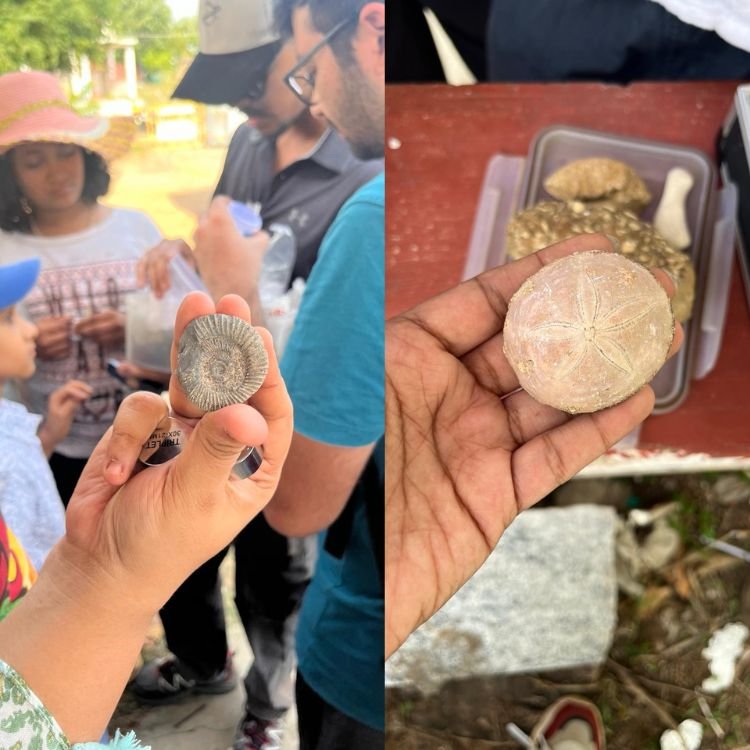
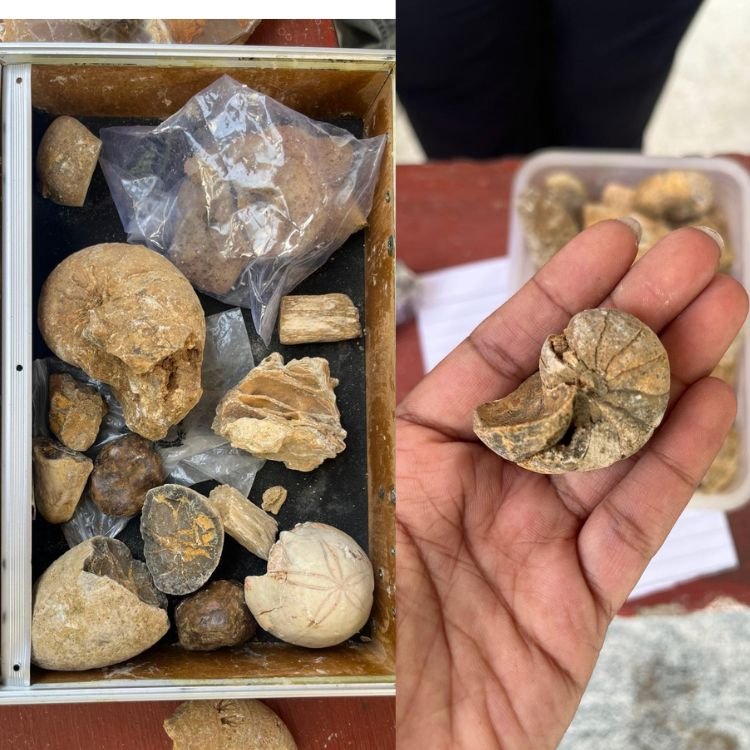
What you might find
No find is guaranteed, but small shell fossils are common. The resource people will help everyone search.
Highlights
Itinerary
Day 0 · Friday, 16 October
The AC bus picks up from three points:
| Pickup point | Time |
|---|---|
| Banashankari 2nd Stage Metro Station | 9:15 pm |
| Silk Board Metro Station | 9:45 pm |
| Electronic City NICE Road exit | 10:15 pm |
From there, we drive overnight to Ariyalur. Please arrive 10 minutes early. Exact spots will be shared on WhatsApp before the trip.
Day 1 · Saturday, 17 October
We reach Ariyalur around 5:30 to 6:00 am. Rooms are ready on arrival, so you can check in and rest before breakfast.
Kit handover and a short safety briefing, then out into the field. The first site is in the younger rock layers from the end of the Cretaceous. The resource people show you where to look, how to spot a fossil in rock, and how to remove it without damaging it.
A look at specimens from across the region, including ammonites, fossilised wood and dinosaur remains. Seeing complete specimens helps you recognise fragments in the field.
The afternoon is kept free so everyone can rest through the heat.
A short walk through the rock layers in evening light to learn how to read them. Back at base, you clean your morning finds, identify them with the resource people and record each one in your field notebook.
Dinner together, then an early night before the morning hunt.
Day 2 · Sunday, 18 October
An early start, while it's cool, at an older formation from roughly 100 million years ago. Different layers hold different animals, so expect new finds.
Everyone's finds from the weekend are laid out together. The geologists and paleontologists go through them and answer questions.
A look at how Ariyalur's limestone is quarried and used. This visit is subject to permission.
Rajendra Chola I built this temple in the 11th century to mark his victory march to the Ganga. It sits roughly 1,000 years in the past, after a weekend spent tens of millions of years back.
Dinner nearby, then the overnight drive back to Bangalore.
Day 3 · Monday, 19 October
Drop-offs between 4:30 am and 5:30 am, at the same points in reverse order.
Your fossil hunting kit
What's included
Not included
- Personal expenses
- Anything not listed above
Who it's for
This trip is open to all ages: families, kids and adults. No background in science is needed, just curiosity.
Children & Field Conditions
Children under 12 must travel with a parent or guardian.
During the hunts, families with young children and adults work in separate groups, each with its own resource person.
The field sessions involve 2 to 3 hours of walking on uneven, open ground.
What to carry
- Closed shoes with good grip
- Cap or hat and sunscreen
- Refillable water bottle
- Light, full-length clothing for the field, plus a change of clothes
- Light rain jacket
- Small backpack
- Personal medication
Collecting fossils responsibly
Common fossils found during the hunts are yours to keep. If you find something rare, such as bone or teeth, or anything the resource people flag, it will be photographed, recorded and handed over for study. No collecting is allowed at the museum, the mine or the temple.
Safety
- The resource people and the Above Zenith team are with the group at all times.
- The field sessions are timed for the cooler parts of the day.
- A first aid kit travels with the group.
- In rain, the plan adjusts, and slippery or unsafe ground is avoided.
FAQs
Will I definitely find a fossil?
Small shell fossils are common in Ariyalur, and most people find something. Larger or rarer finds depend on luck and the day.
Is this suitable for young children?
Yes. Kids hunt at an easier site, in their own group, with a resource person. Children under 12 must travel with a parent or guardian.
Do I need any prior knowledge?
No. Everything is explained on the trip.
Can I keep what I find?
Yes, for common fossils. Rare finds are recorded and handed over for study.
What is the accommodation like?
Simple, clean twin sharing AC rooms with attached western washrooms. Rooms are available as soon as we arrive on Saturday morning.
What food is served?
All meals are vegetarian: breakfast, lunch and dinner on both days, plus an evening snack on both days. If you have any dietary requirements, let us know when you register.
Can families share a room?
[Yes / extra bed option and cost]
What if it rains?
October is the start of the northeast monsoon. If it rains, we adjust timings and focus on safer ground and indoor sessions.
Is the cement plant visit confirmed?
It depends on permission from the plant. If it doesn't come through, we will visit a limestone mine edge.
Where are the pickup points?
Banashankari 2nd Stage Metro Station (9:15 pm), Silk Board Metro Station (9:45 pm) and Electronic City NICE Road exit (10:15 pm). Drop-offs on Monday morning are at the same points, in reverse order.
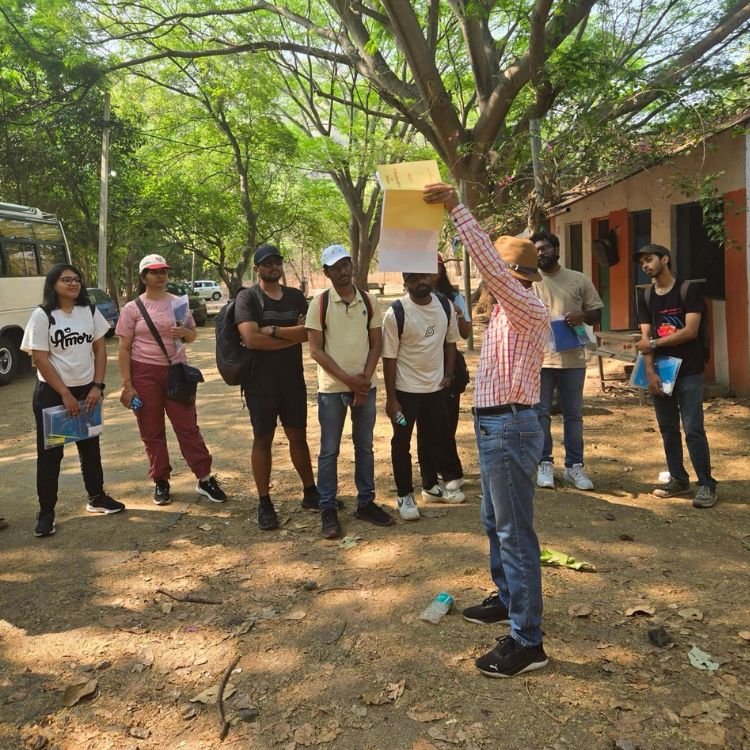
Moments from Our Last Workshop